


A · 01
Energy
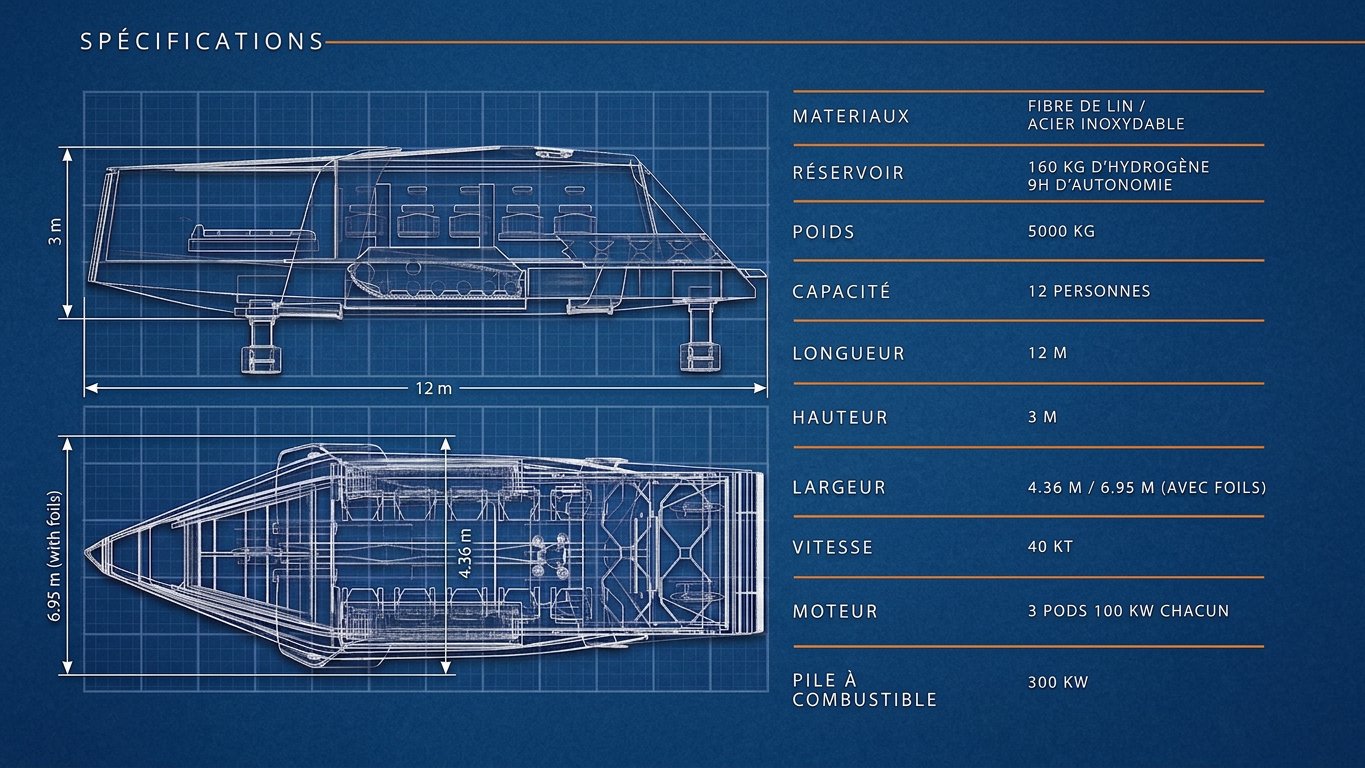
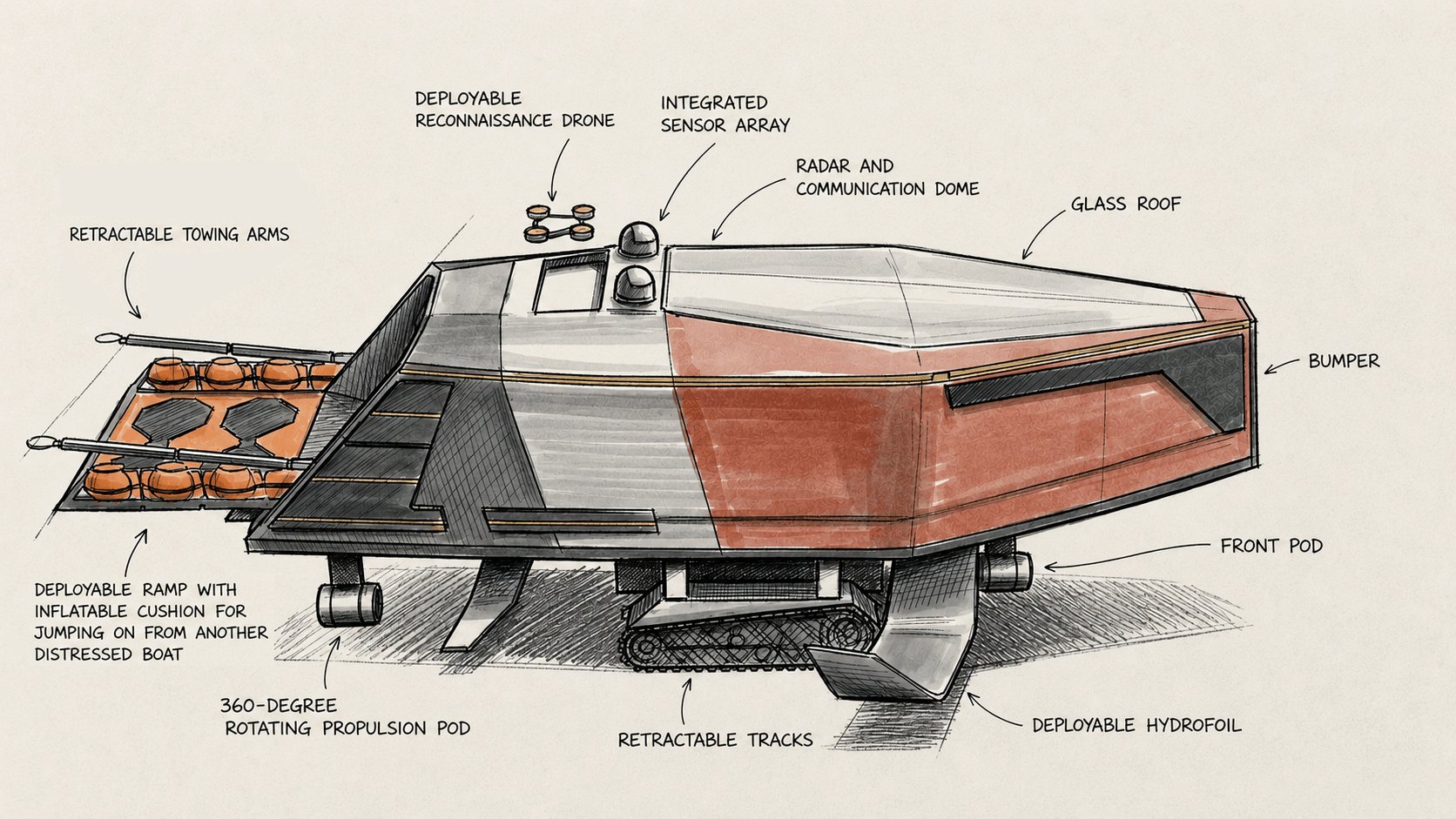
How do you power an autonomous SAR drone that must operate 9h, reach 40 knots, tow 10 tonnes and redeploy within minutes?
Discarded · Lithium-ion battery
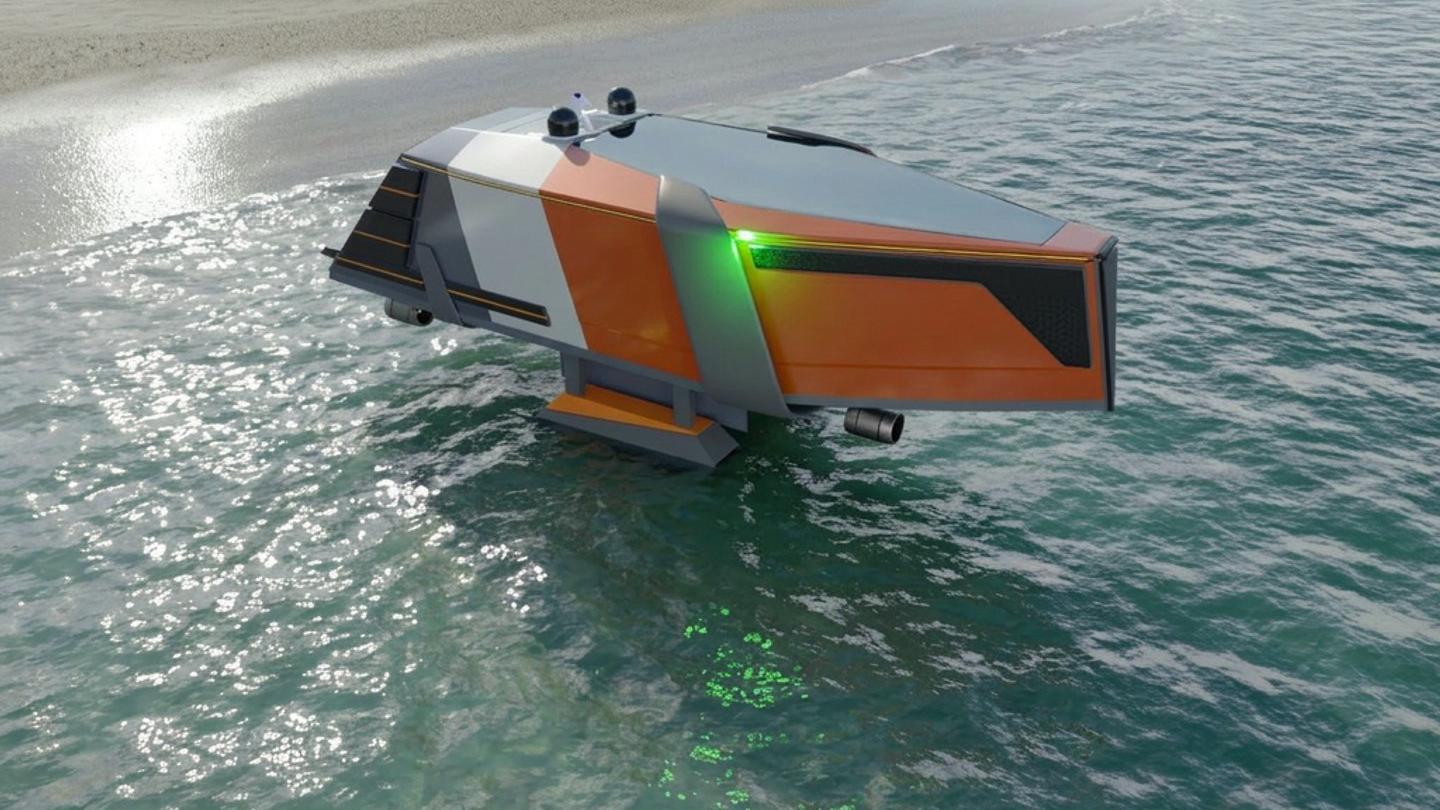
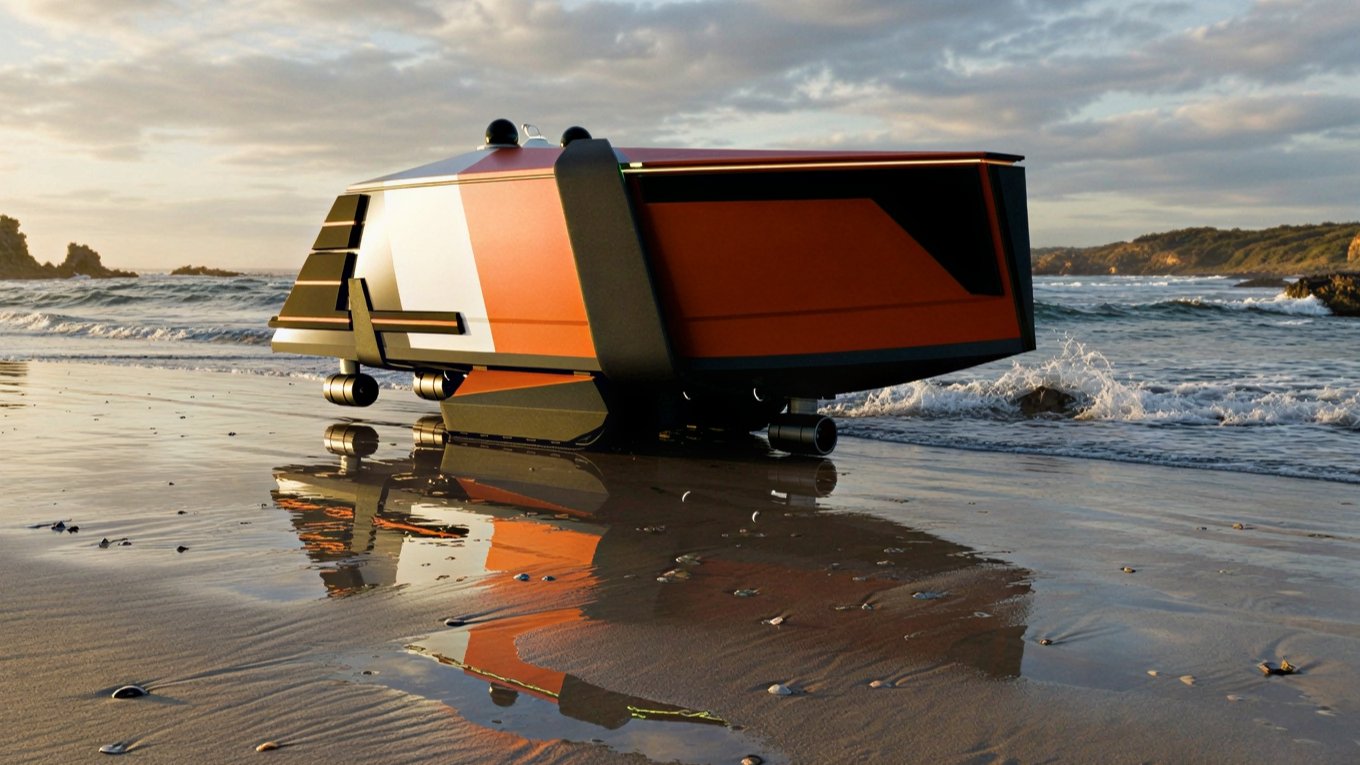
Around 3.5 tonnes of batteries would be needed for 9h SAR autonomy, i.e. 70% of the total allocated weight (5000 kg). On a drone that switches to amphibious mode via its retractable tracks, this mass compromises stability and causes the vehicle to sink into the sand. Charging requires several hours on dedicated infrastructure, incompatible with emergency operation. In case of damage and immersion, corroded batteries release toxic compounds into the marine environment.
Selected · Hydrogen 700 bar + 300 kW fuel cell
160 kg of H₂ provides 9h autonomy in roughly 600 kg of full system, six times lighter than an equivalent battery pack. Refueling in 5 minutes via mobile truck, deployable even on a beach where the drone is on standby. France also has the Lorraine white hydrogen deposit (≥ 34 Mt, potentially the largest reserve in the world), its nuclear fleet and its coasts to produce locally. In case of accidental immersion, H₂ disperses instantly into the atmosphere with no polluting residue.