All Projects

Project 02 / 03  ·  Maritime · Performance Sailing

AUREON

164 ft Performance Explorer Sailing Yacht 2024 – 2025 Personal Concept · 2025

Typology

Performance Explorer Sailing Yacht

Year

2025

Tools

Blender · Photoshop · Vizcom

Context

AUREON Yachts · Personal Concept

00

Overview / Brief

AUREON is a 164 ft Performance Explorer Sailing Yacht — a 50-meter monohull that refuses the compromise the superyacht-sail market has imposed for two decades: slow luxury cruisers or stripped-down racers. AUREON insists on both.

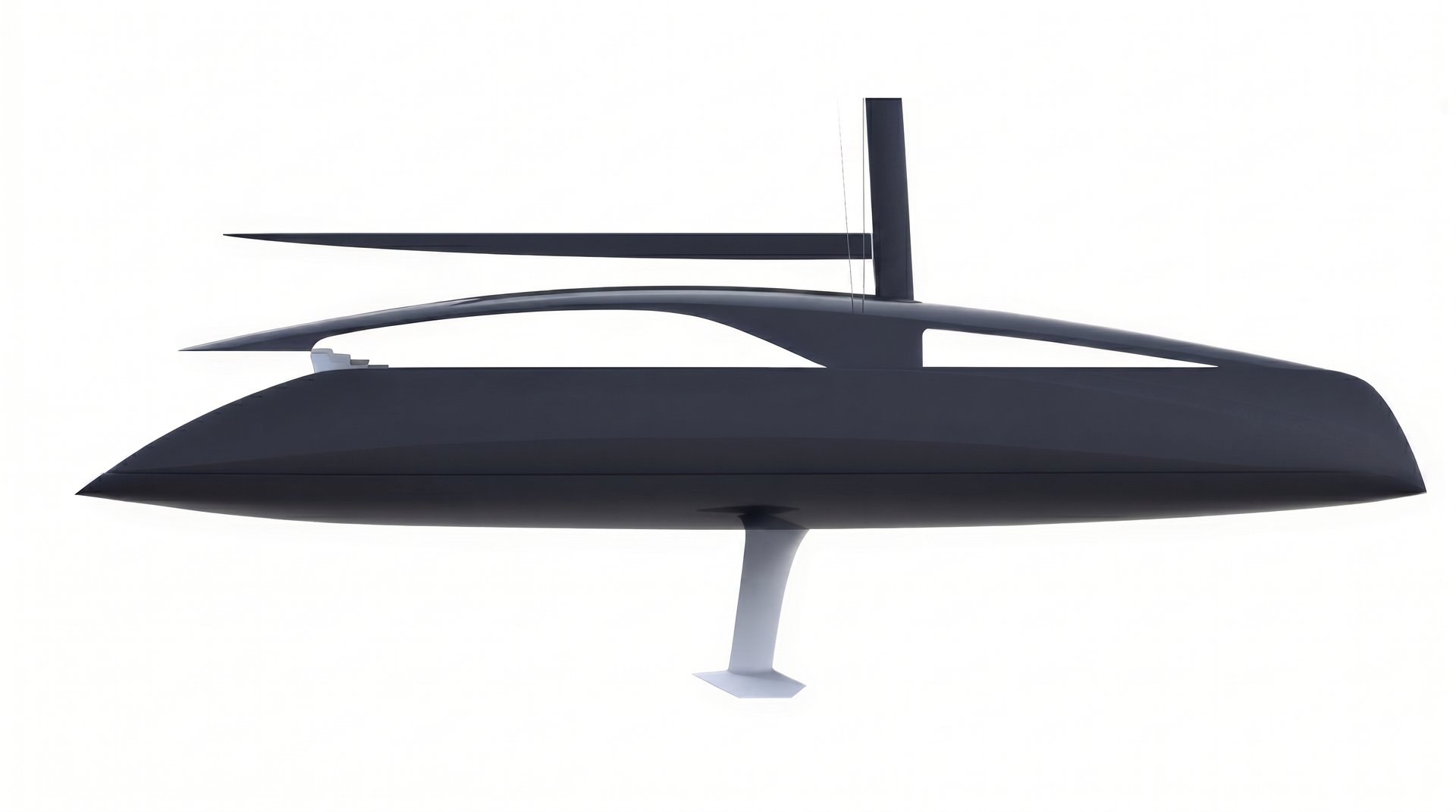
Built around the DNA of a racer-cruiser like an A35 transposed to superyacht scale, AUREON combines a carbon/Nomex hull, a 72 m carbon mast, 1 750 m² of sail area and a retractable 6 m keel — under a silhouette designed as floating architecture rather than a conventional sailboat.

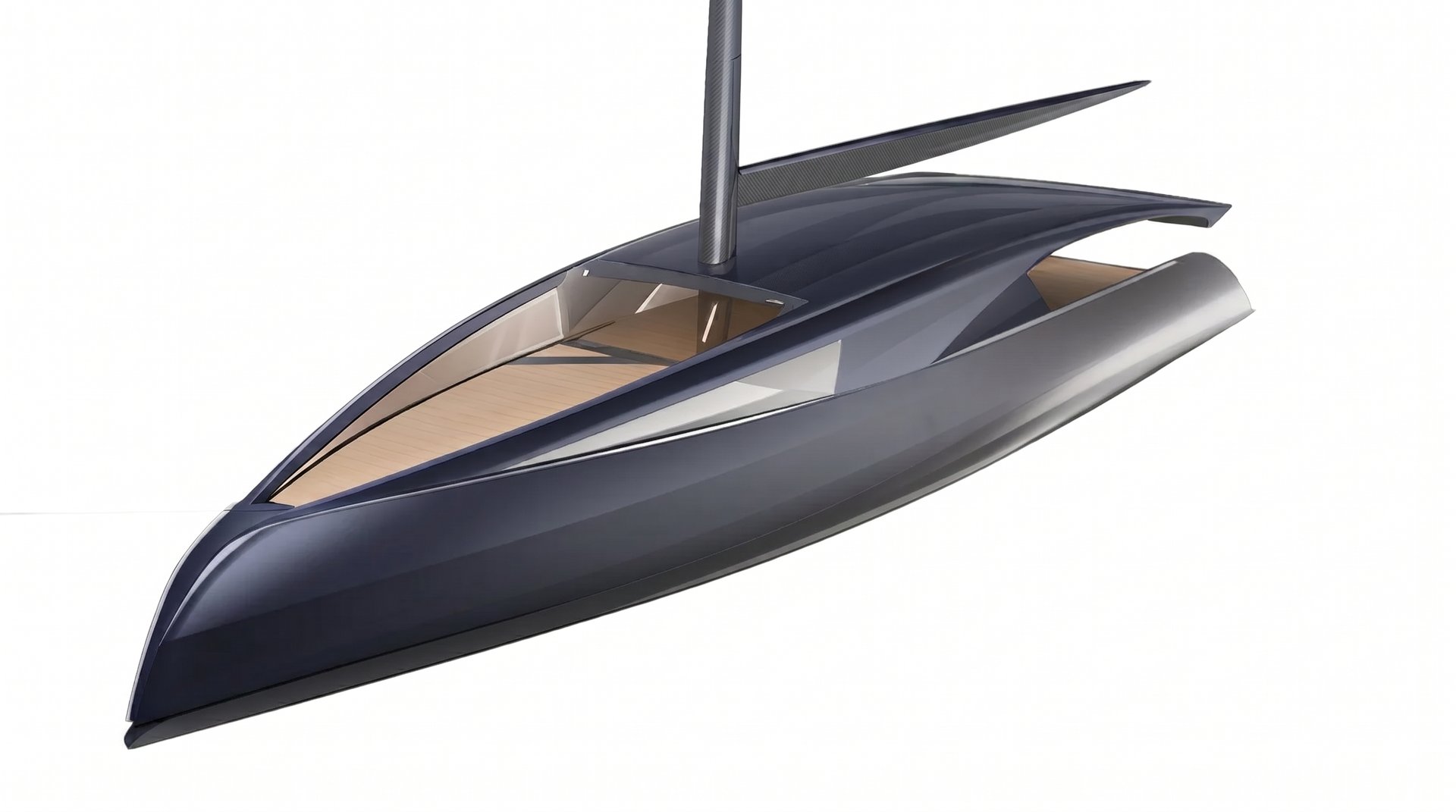
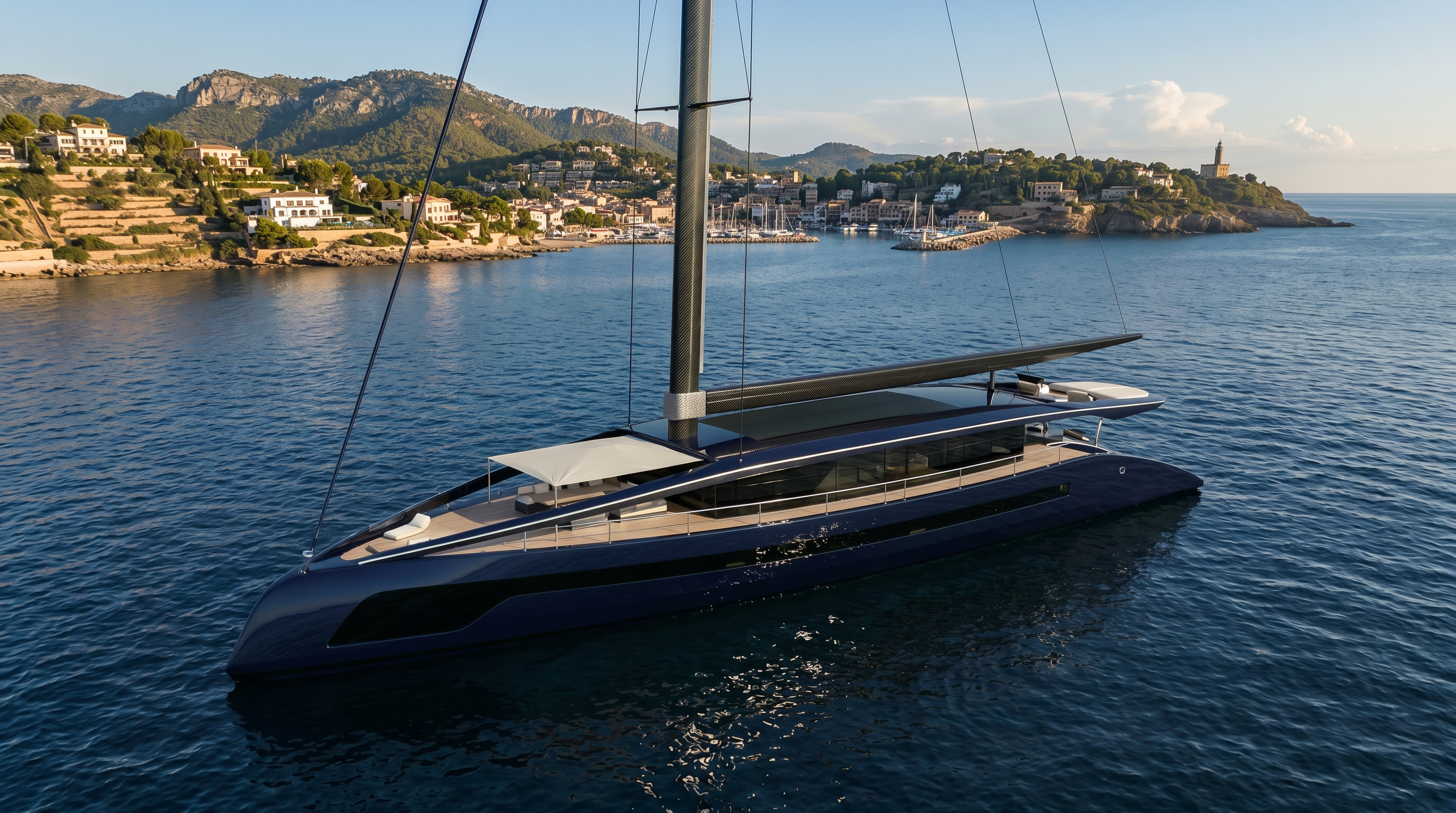
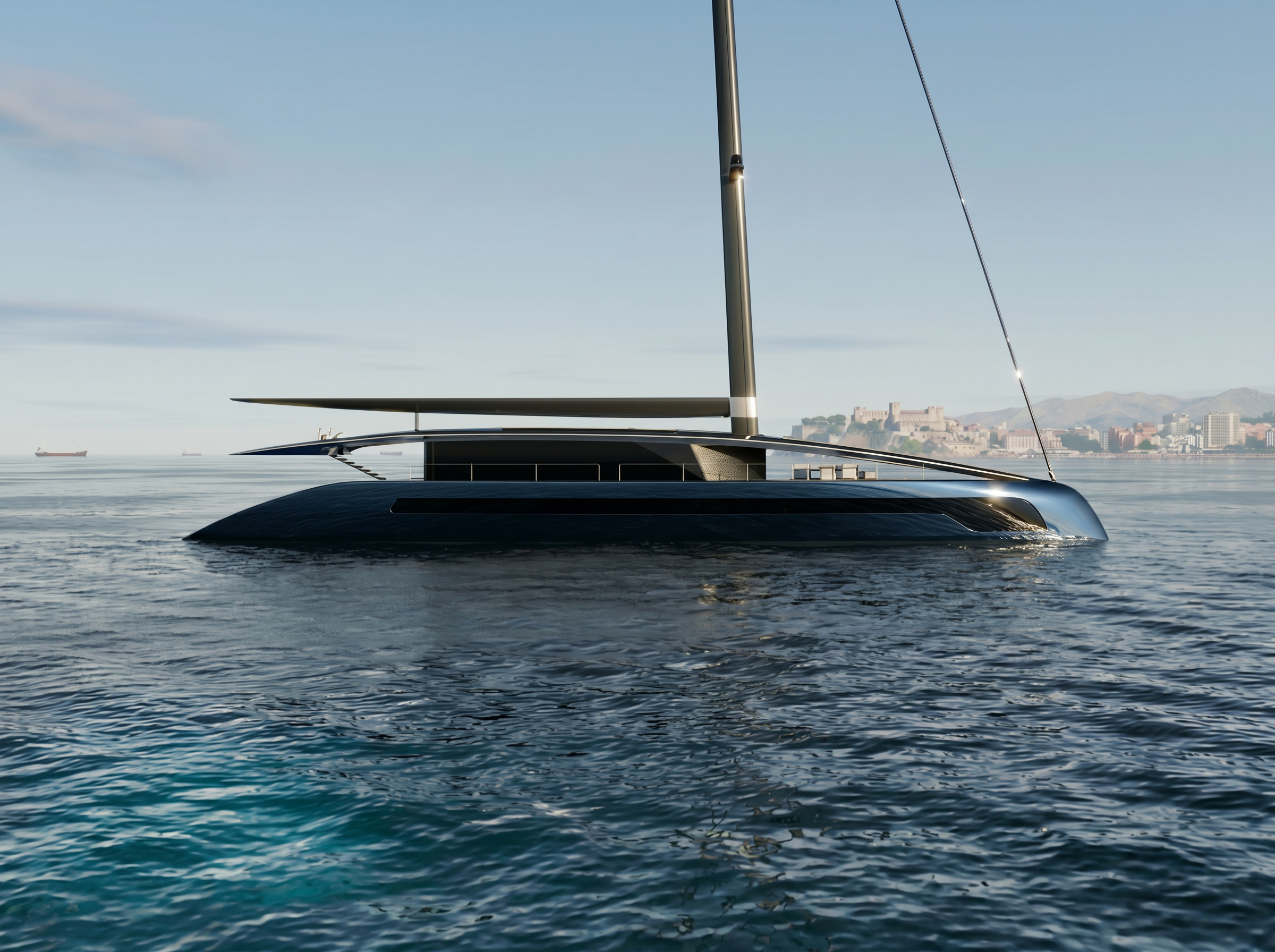
The design language is deliberately pure and architectural — a low-profile flush deck, a continuous lateral glass band, a monumental rear staircase, and a lustrous navy blue hull. The yacht is a manifesto: visibly precious and visibly fast.

Author note

Personal concept project developed in 2025 to take a position on a segment I find formally stagnant. The dominant 50-meter sailing yachts — Perini Navi, Royal Huisman, Baltic — have refined the same architectural grammar for twenty years. AUREON is my response: what would a 50 m yacht look like if it was conceived as architecture first, sailing performance second, both uncompromised? Eight years of personal sailing on cruiser-racers (up to 16 m) inform the technical choices — heel, sail trim, keel geometry are not afterthoughts.

01
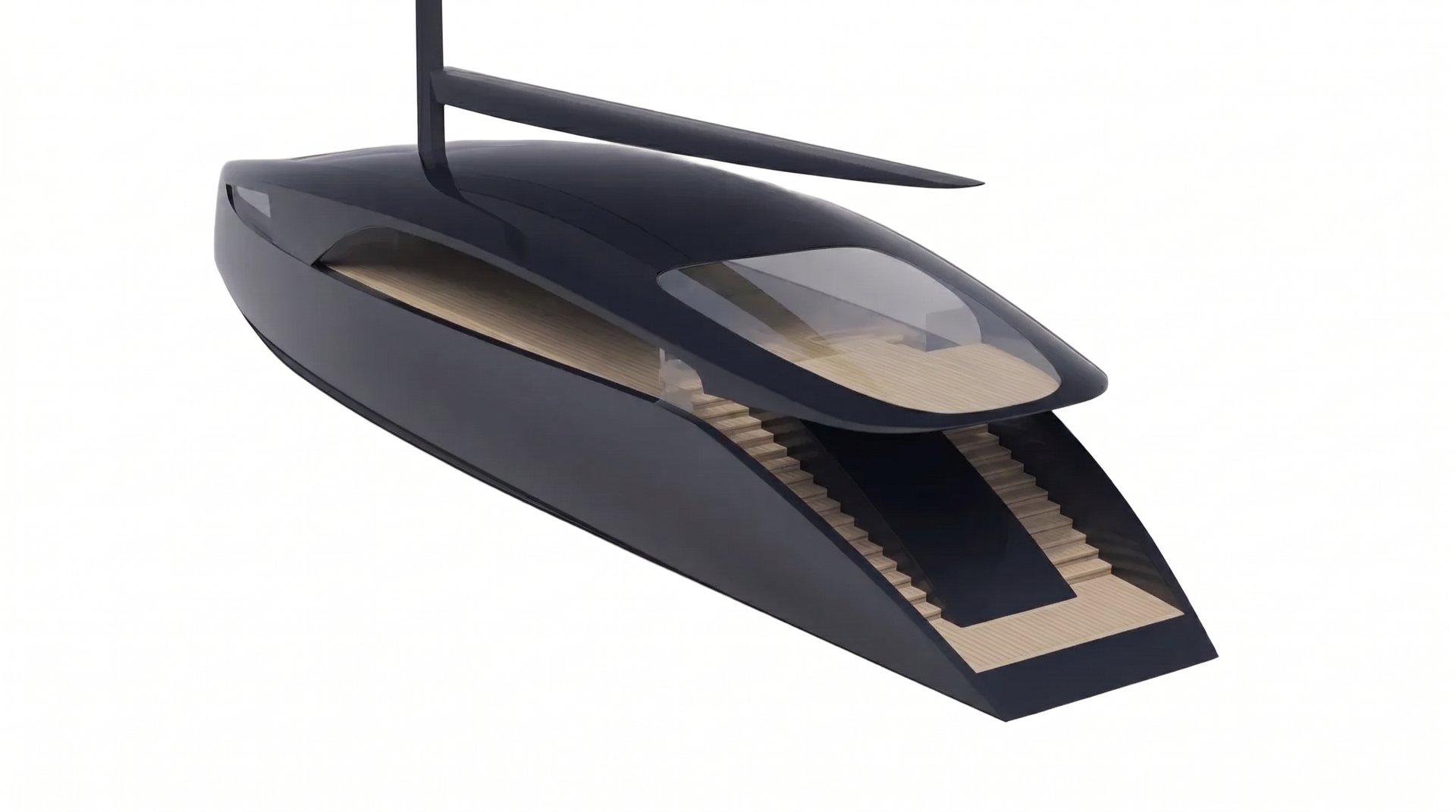
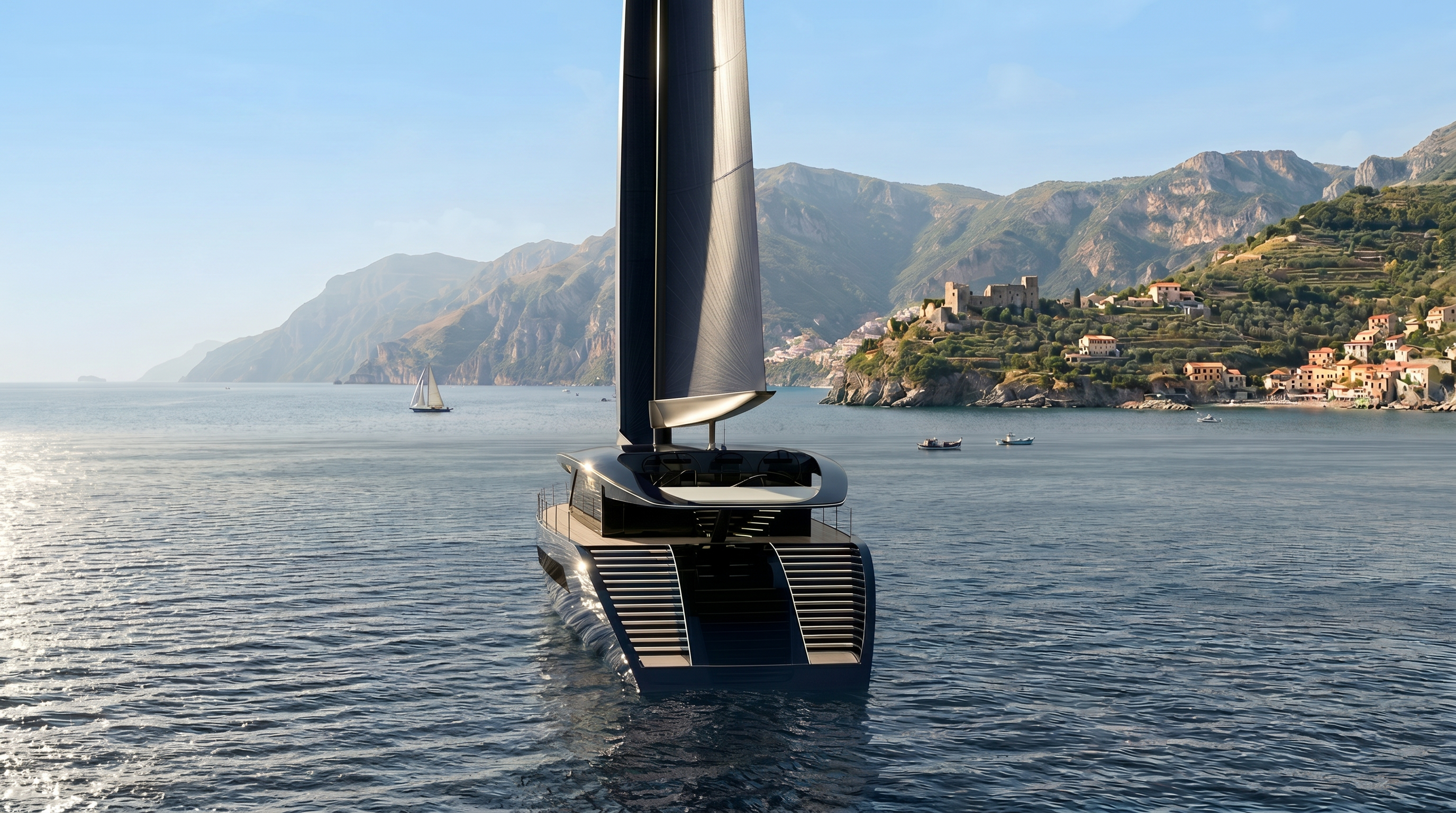
Monumental rear staircaseScenographic sea access — chosen over the conventional hydraulic platform
02
Flush deck silhouetteNo traditional superstructure — the yacht reads as a single architectural volume
03
Seamless lateral glass bandContinuous glass ribbon along the hull — no portholes, no broken rhythm
04
Single carbon mast — 72 mNo visible shrouds, minimalist rigging — racer-cruiser DNA visible from afar
05
Retractable lifting keel — 6 mDeep when racing, shallow for explorer destinations — Patagonia to Mediterranean
01

Context / The 50-meter sail market

For two decades, the 50-meter sailing superyacht market has refined the same architectural grammar — heavy displacement, traditional rigs, gentleman cockpits. Performance and luxury have been treated as opposing forces. AUREON refuses that compromise.

0ft

Length overall — 50 m monohull

0kn

Top speed — carbon-Nomex hull at 240 t

0

Upwind sail area — 72 m carbon mast

0

Guests — plus 7 permanent crew

02

Inspirations / Form language

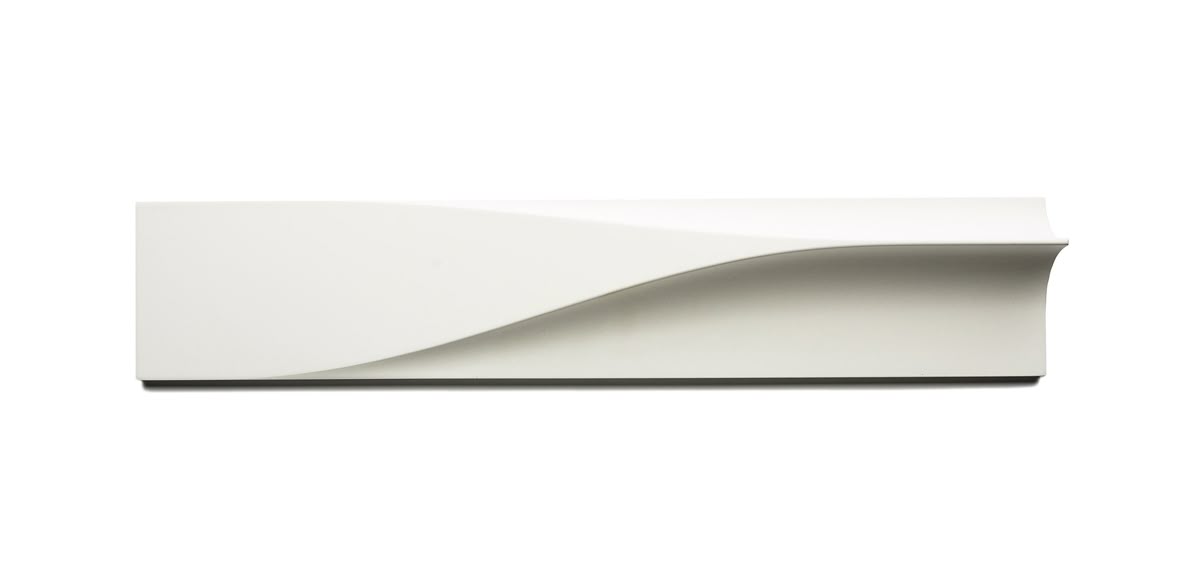
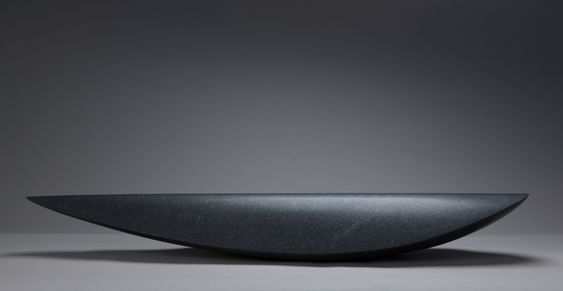
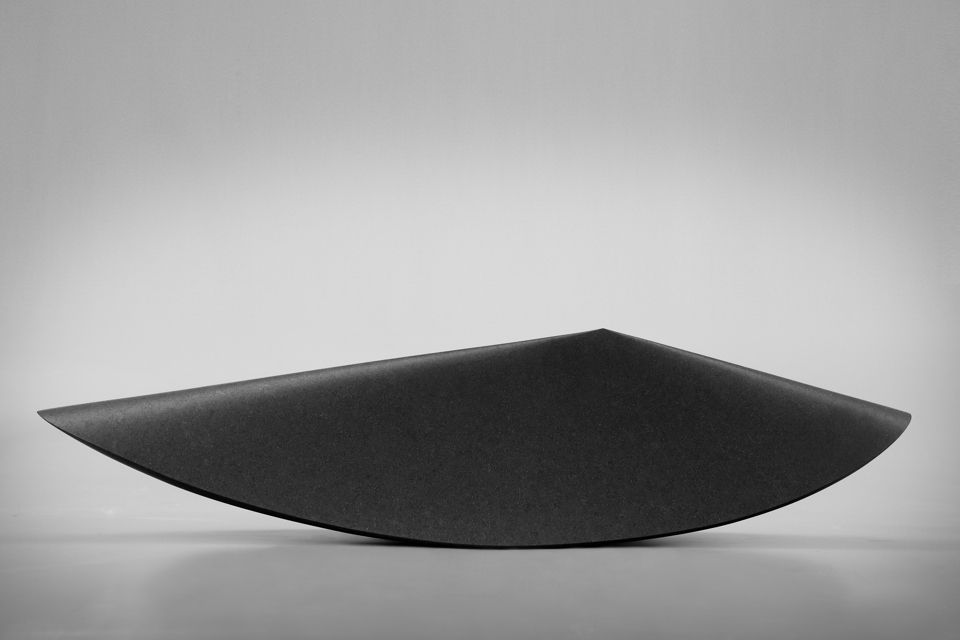
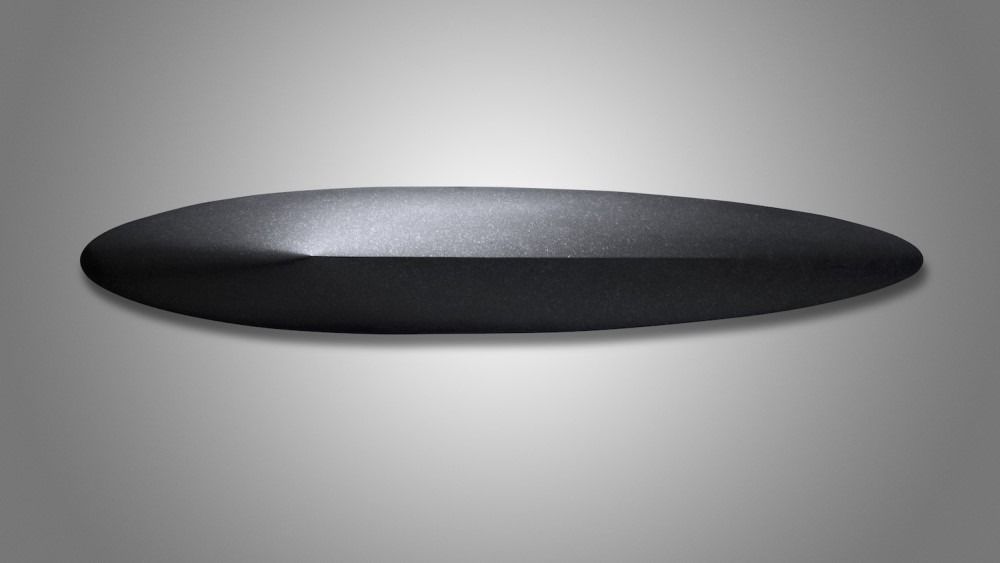
Six visual sources informed AUREON's formal grammar. None of them are sailing yachts — and that is the point. The silhouette draws from minimalist furniture, fluid architecture, and contemporary sculpture. The brief: design a 50-meter yacht that reads as a sculpted object first, a sailing machine second.

Aybars Asci — Liquid Forms tile, 2016 — concave organic curve carved into rectangular volume

Aybars Asci · "Liquid Forms" · 2016

A concrete tile sculpted by a single fluid curve. AUREON's signature grammar — a rectangular volume carved by a continuous gesture — finds its source here, in an architect's project that questioned the same tension: material rigidity traversed by fluidity.

Armen Agop — black granite sculpture, hull-like profile, low stance

Armen Agop · Sculpture, black granite

The hull-sculpture in its purest form. Armen Agop, who has been carving stone from his Pietrasanta studio for over twenty years, makes objects that appear to float — exactly the read AUREON claims on water.

Armen Agop — black granite sculpture, sharp chine, angular profile

Armen Agop · Sculpture, black granite

The sharp variation — a hard chine running the entire length. The most "racing" piece in the moodboard, projecting perceptual speed even at rest. AUREON adopts the same formal tension at the hull level.

Armen Agop — black granite sculpture, top-down view, elongated boat-shape proportion

Armen Agop · Sculpture, black granite

The boat-shape seen from above. Elongated ellipse, piercing bow, slightly swelled center — the exact proportion AUREON's deck plan aims to reach.

Sources collected on Pinterest during preliminary research, originally without attribution. Authorship will be credited as it is identified — if you recognize any of these works, please get in touch.

04

Decisions / Key trade-offs

Three architectural choices define AUREON. For each, I compared the conventional option (what Perini Navi, Royal Huisman or Baltic would do) against the position I wanted to take — silhouette, performance, formal honesty — and committed to the option that served the manifesto.

A · 01

Sea access

How do you access the sea from a 50-meter sailing yacht — and turn the access itself into a design signature rather than a piece of utility equipment?

Discarded · Hydraulic transom platform

The standard solution on every 40m+ sailing yacht. A flat plate hinges down at the stern, motorized by hydraulic rams, and creates a swim platform at water level. It works perfectly. But it is functional, invisible when stowed, and aesthetically inert — the same gesture as on a Perini Navi, a Royal Huisman or a Baltic 142. It solves the problem and leaves no trace.

Selected · Monumental rear staircase

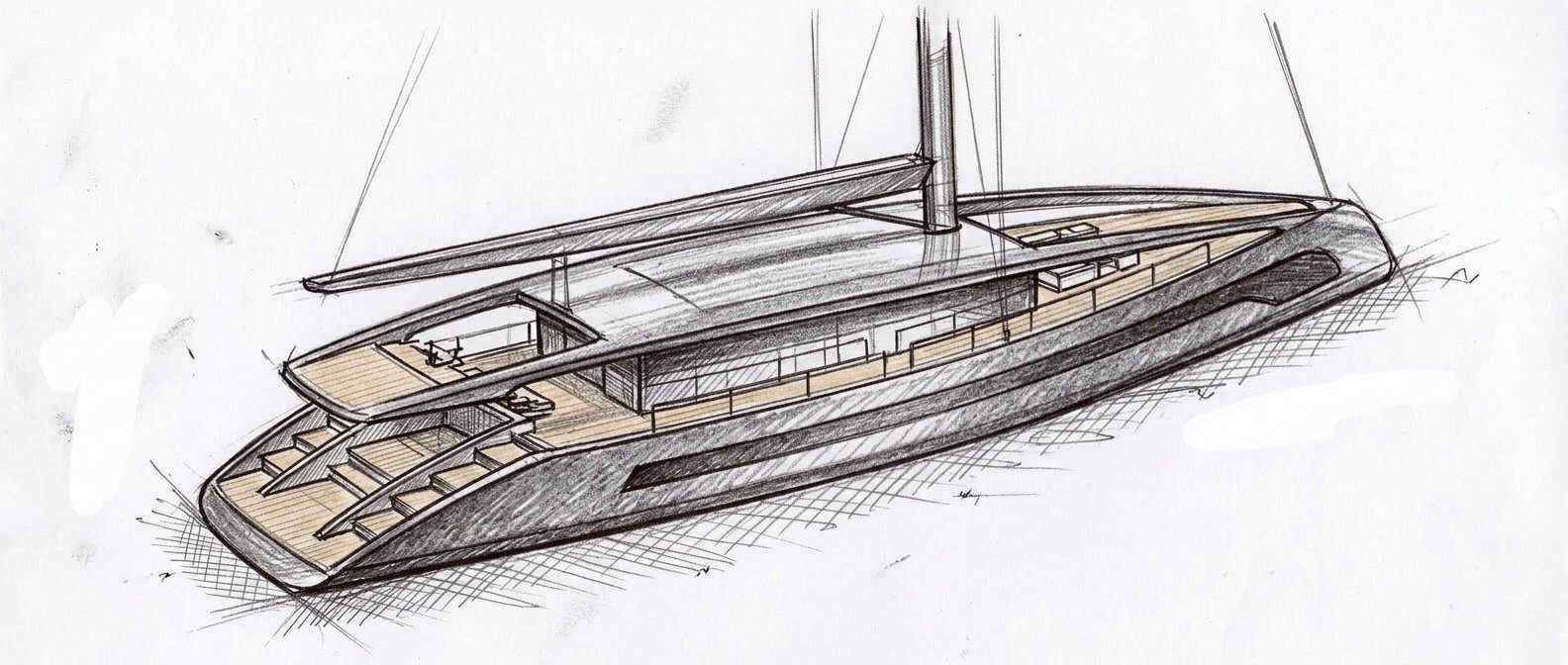
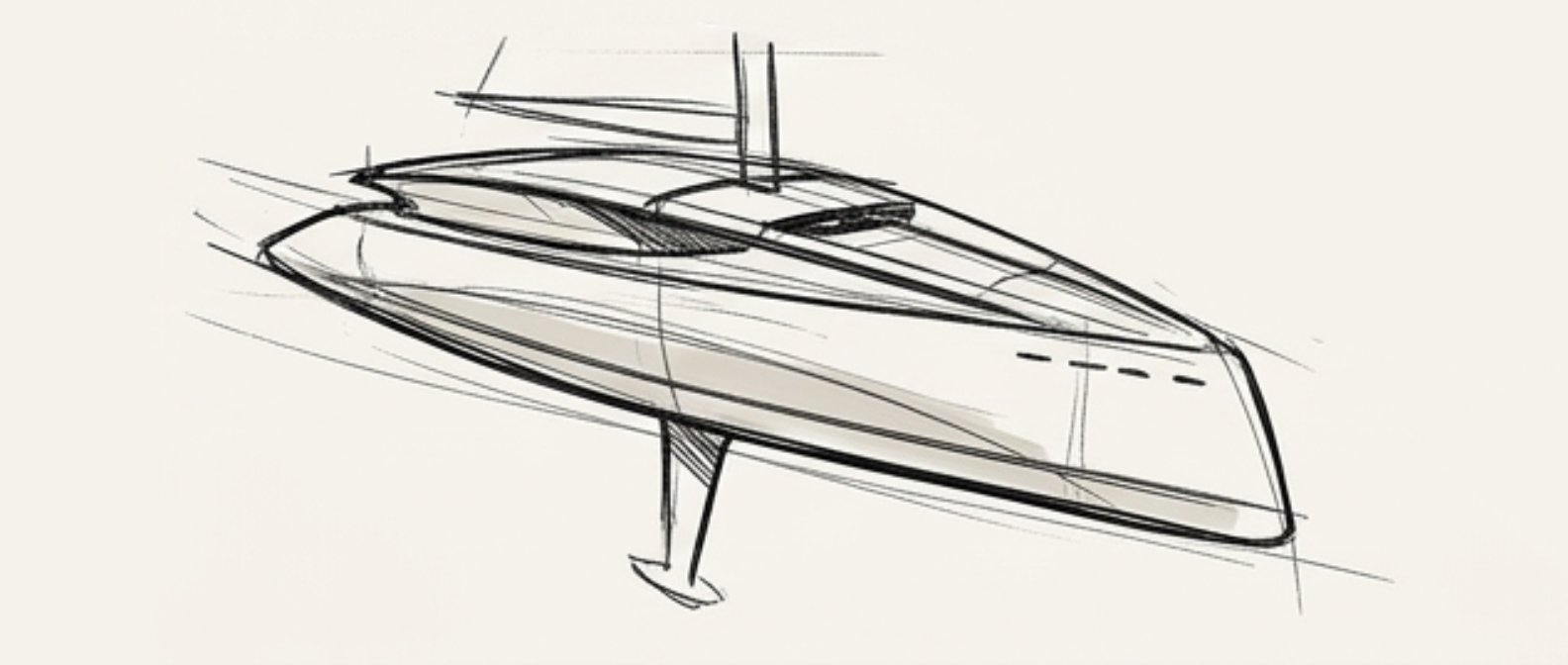
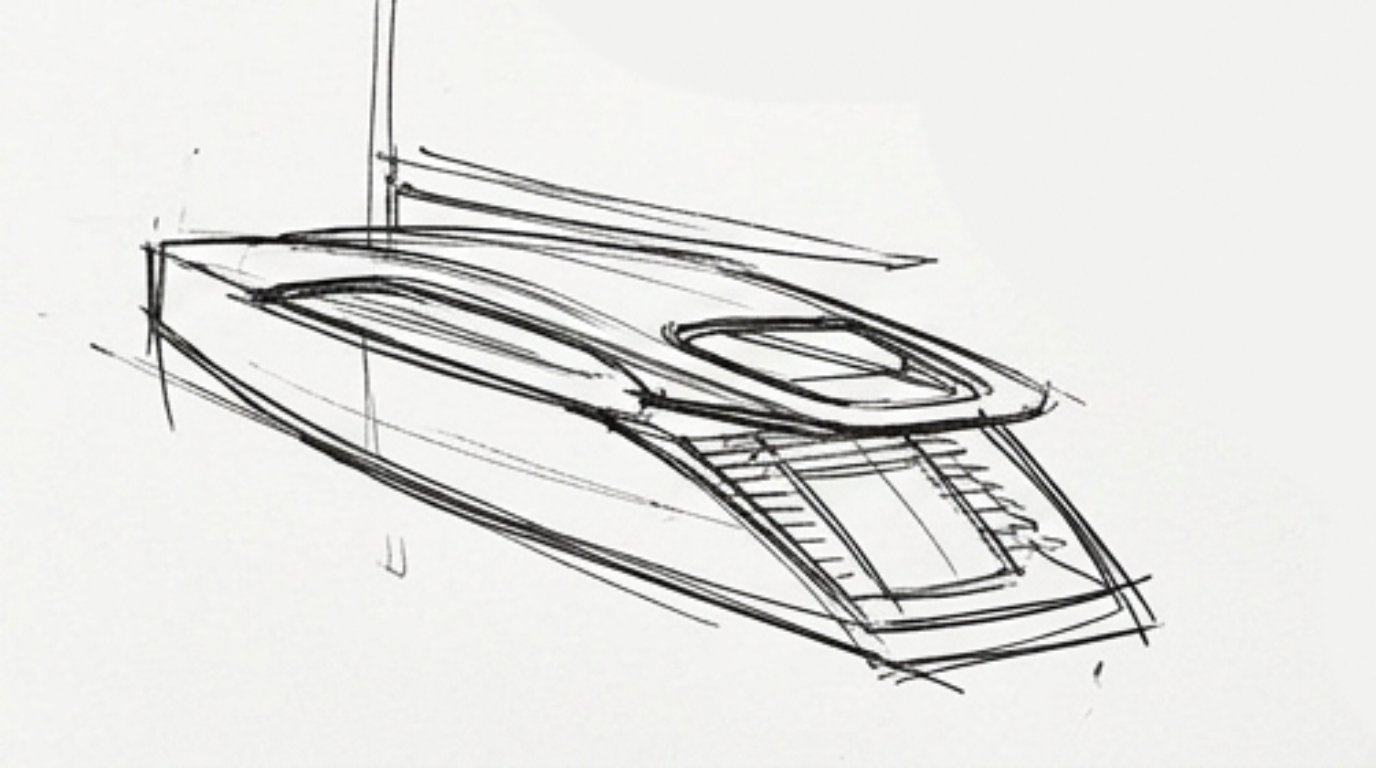
A two-flight architectural staircase, integrated into the structure of the stern, descending from the main deck to the water in a single sculpted gesture. Always visible. Reads as architecture rather than equipment. It transforms the act of boarding from a functional moment into a scenographic one — closer to entering a museum than stepping off a boat. The trade-off: more visible surface to maintain, less protection of the cockpit from the sea state. Accepted, because the staircase is the boat's signature read from the dock.
Verdict

On a yacht intended as a manifesto of architecture rather than a yard exercise, the staircase wins over the platform — it sacrifices nothing functional and gives the design its most identifiable gesture.

B · 02

Rig configuration

What rig configuration on a 50-meter explorer yacht — sized for ocean crossings up to 4 000 nm and capable of 24 knots, while preserving the architectural purity of the silhouette?

Discarded · Ketch (two-mast configuration)

A traditional ketch splits the sail area across two masts (main + mizzen), which divides the sail handling effort and offers more flexibility in heavy weather (you can drop the mizzen first). It is the conservative choice — the one a 50m cruising yacht owner familiar with classic Perini designs would expect. The cost: two masts double the visual mass aloft, fragment the silhouette into three vertical strokes, and signal "comfortable cruiser" rather than "performance machine".

Selected · Single carbon mast, 72 m

A single 72-meter carbon mast carrying 1 750 m² of upwind sail area in a sloop configuration. Visually, one vertical stroke piercing the silhouette — clean, racer-DNA, unmistakable from a mile away. Technically, modern carbon construction and hydraulic furling systems make single-mast sail handling viable up to this size (Magic Carpet E, 100 ft, runs the same configuration). The mast becomes the project's second signature after the staircase.

Verdict

On a yacht built on the racer-cruiser DNA of an A35 scaled to 50 m, the single carbon mast asserts the performance heritage in one visual gesture — and refuses the visual conservatism of the cruising ketch.

C · 03

Keel geometry

Which keel for a yacht that has to perform like a racer offshore (deep draft, maximum righting moment) and access shallow explorer anchorages (Patagonian fjords, Bahamas, Mediterranean creeks)?

Discarded · Fixed deep keel

A fixed 6-meter bulb keel gives maximum performance — best righting moment, best upwind angle, no moving parts to fail. It is the racer's choice. But on a 50-meter yacht meant to explore beyond Mediterranean marinas — Patagonian channels, Greek islets, Caribbean atolls — 6 m of fixed draft is a permanent constraint. You become the slave of your own keel: anchorages refused, channels avoided, marinas inaccessible. Pure performance ends up shrinking the world the yacht is supposed to explore.

Selected · Retractable lifting keel · 4 m / 6 m

A hydraulically retractable keel that drops to 6 m for racing and offshore passages (full righting moment) and lifts to 4 m for shallow explorer anchorages. Adds mechanical complexity and a few hundred kilograms of structure — but it is the exact technical solution that Baltic Yachts has industrialized on the Canova (43 m) and Pink Gin (54 m), proving the system is mature at this scale. The yacht keeps its racer behavior offshore and its explorer footprint inshore. No compromise; both modes get their full geometry.

05

Systems / Interactive

Drag the hull to rotate it. Switch between sails deployed and bare hull to read the silhouette without the rig — the architecture stands on its own.

Drag to rotate

181 frames · 30 fps · rendered in Blender Cycles

06

Process / Sketches + Timeline

AUREON was developed in three distinct phases, each grounded in a specific medium. The silhouette emerged on paper before any digital tool, was refined through painted iterations, and only then translated into 3D for final renders.

01

PAPER

Sketches

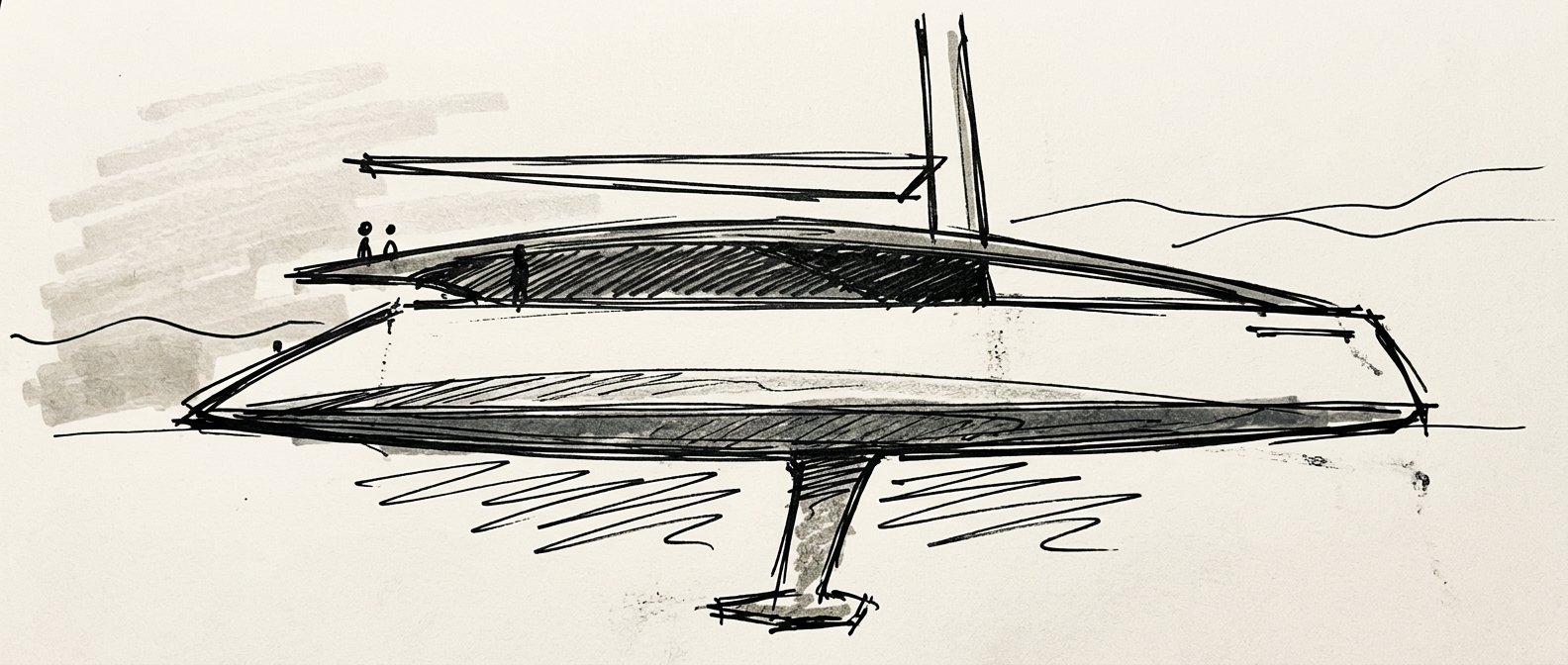
Form ideation in fineliner and pencil — hand gesture, raw proportions, fast iteration. The five signatures (staircase, flush deck, glass band, single mast, lifting keel) were locked at the paper stage, before any digital tool. Roughly two weeks of daily sheets, kept or discarded by feel rather than by rule.

02

DIGITAL

Photoshop overpaints

Selected sketches scanned and refined in Photoshop. Overpaint sessions to test material treatments (hull colour, glass tint, mast finish), lighting moods (clear sky, storm, sunset), and silhouette variations. Convergence on the final composition: lustrous navy blue hull, continuous glass band, dramatic atmospheric lighting.

03

3D

Blender modeling and renders

Modeling from the validated silhouette — hull, deck, mast, sails, keel. Material setup with raytracing, lighting matched to the Photoshop direction. The final hero render was developed in collaboration with Vizcom AI to push atmospheric augmentation (storm sky, golden ray composition) beyond what raw Blender render delivered.

06 · B

Sketches / Ideation

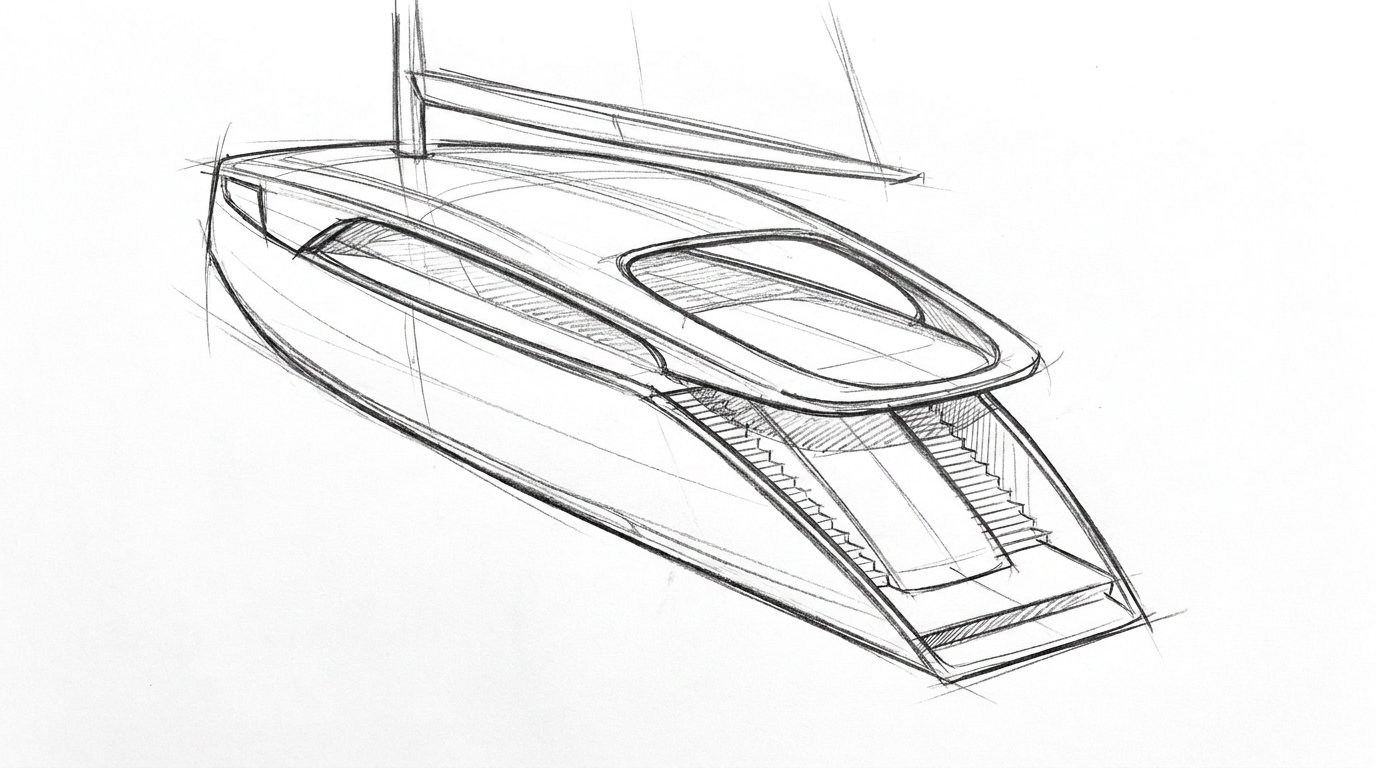
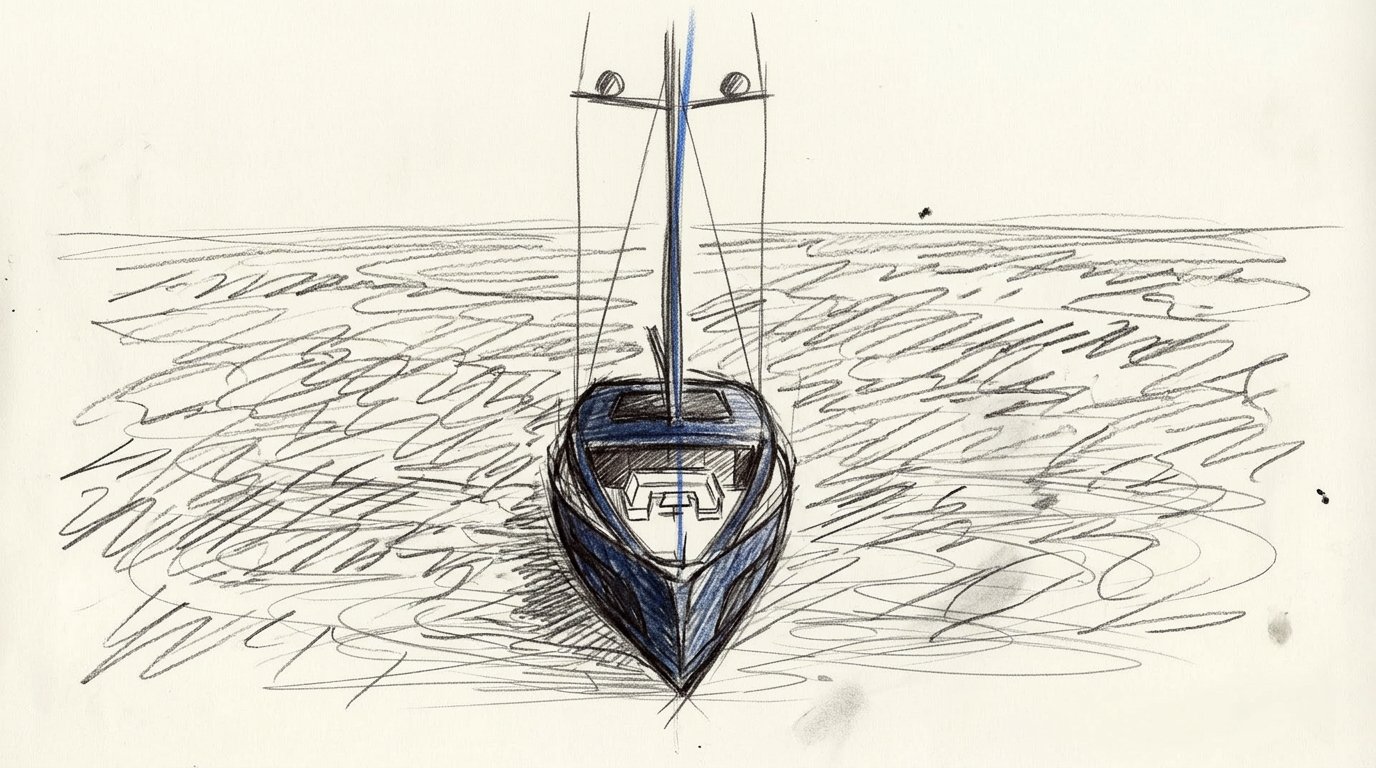
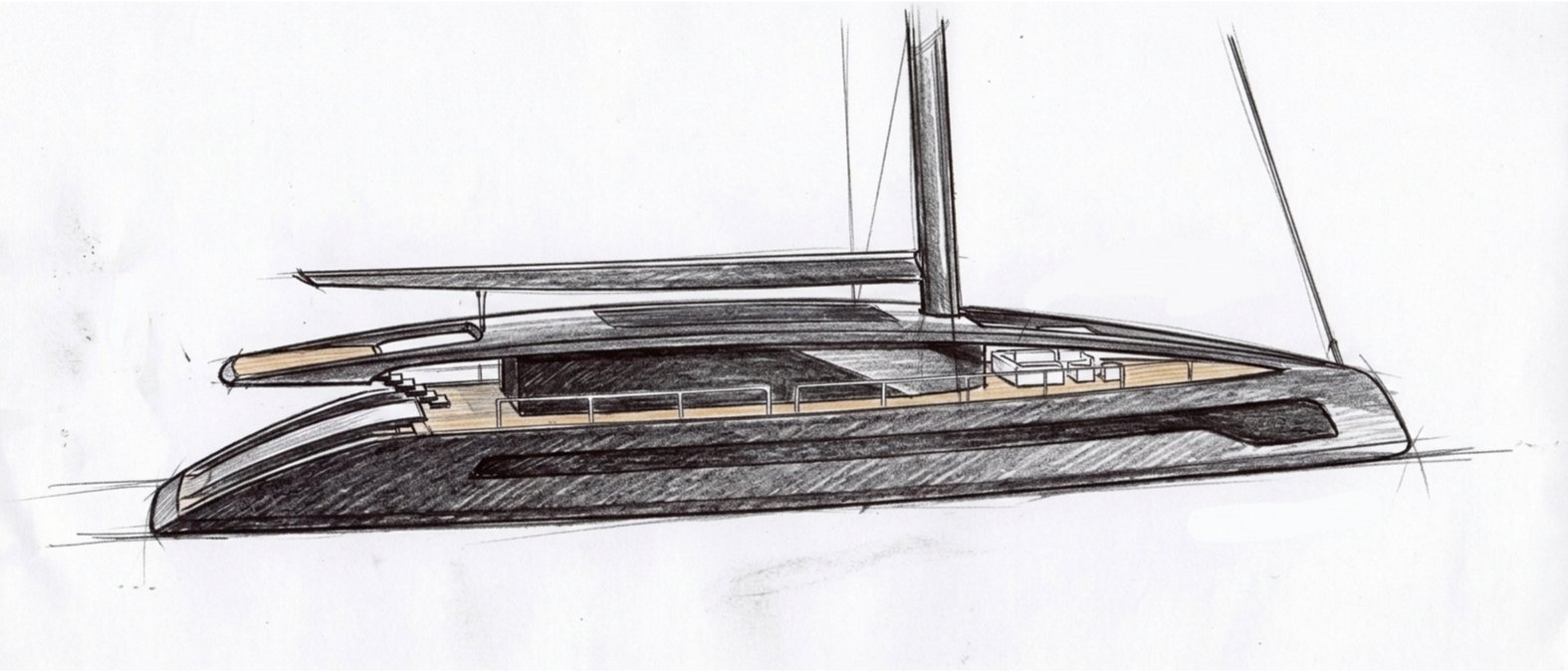
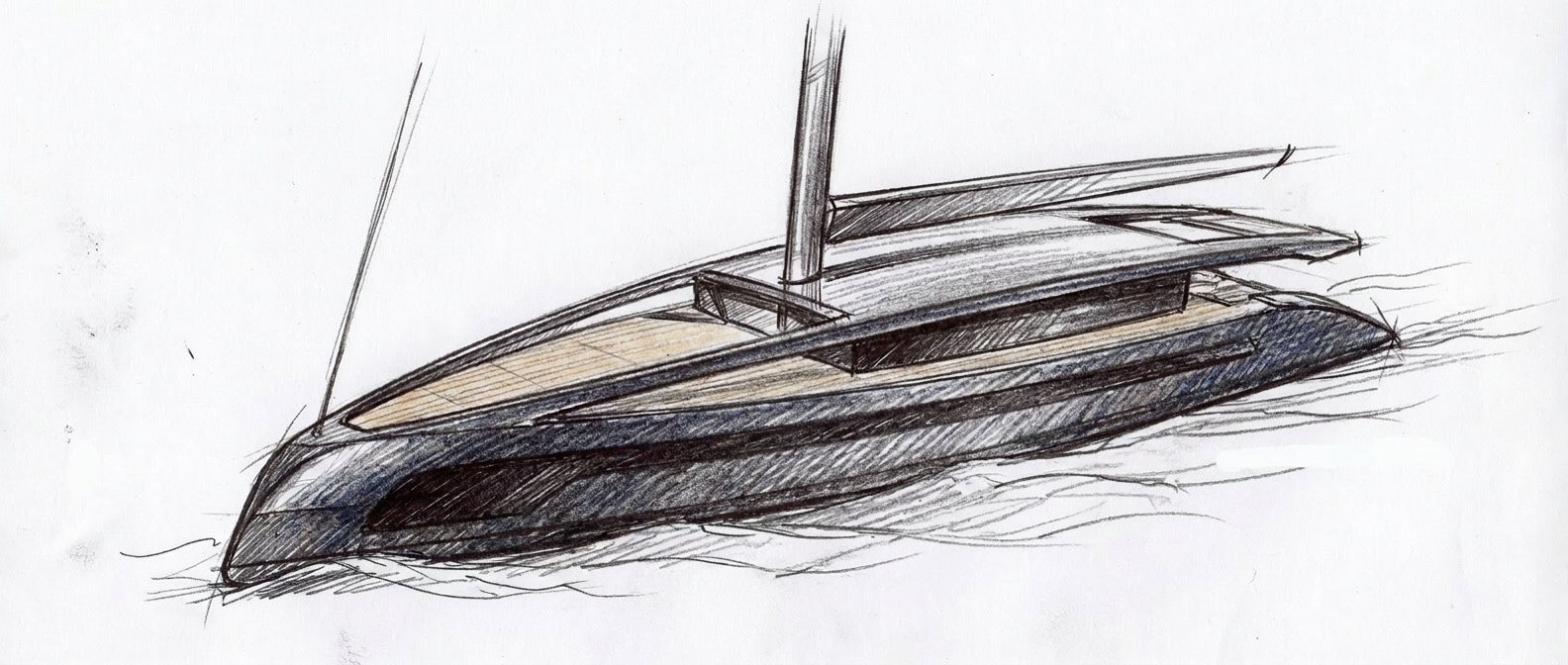
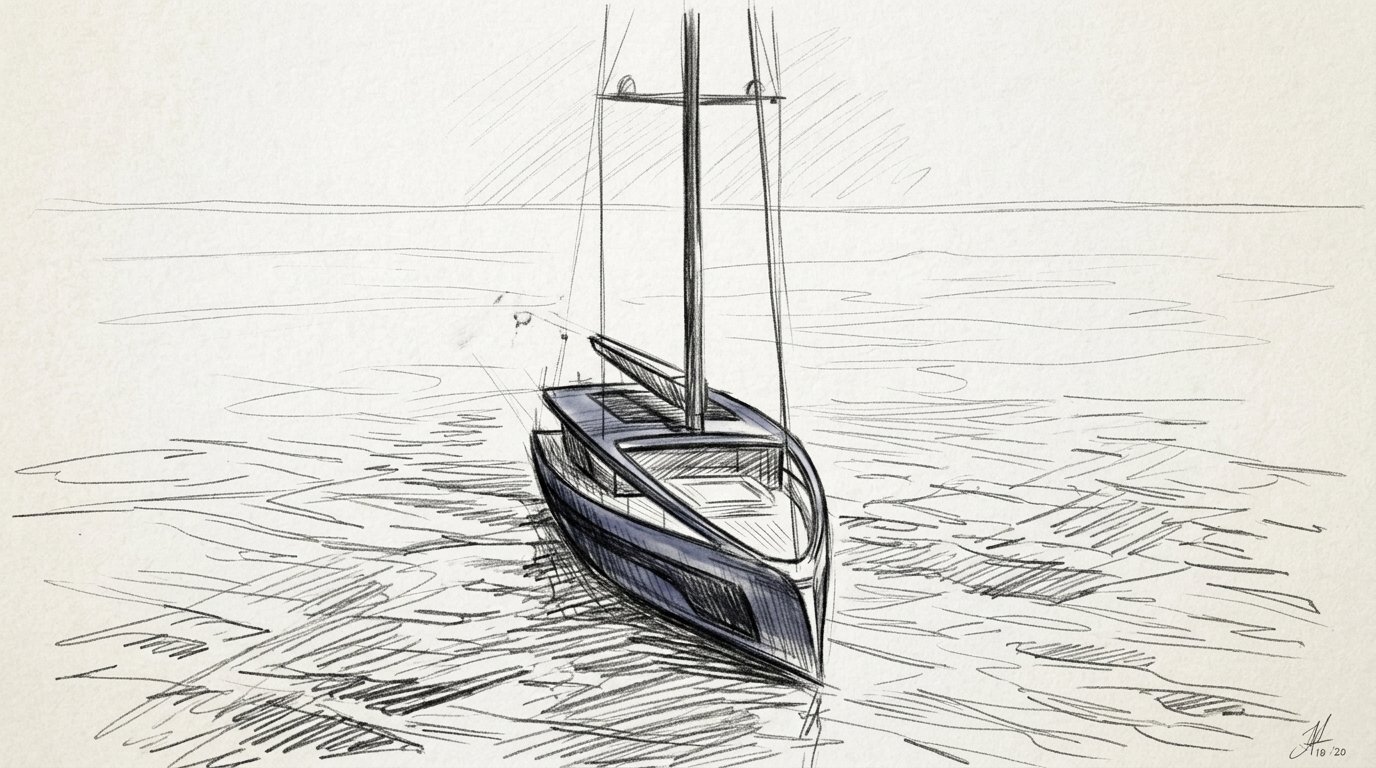
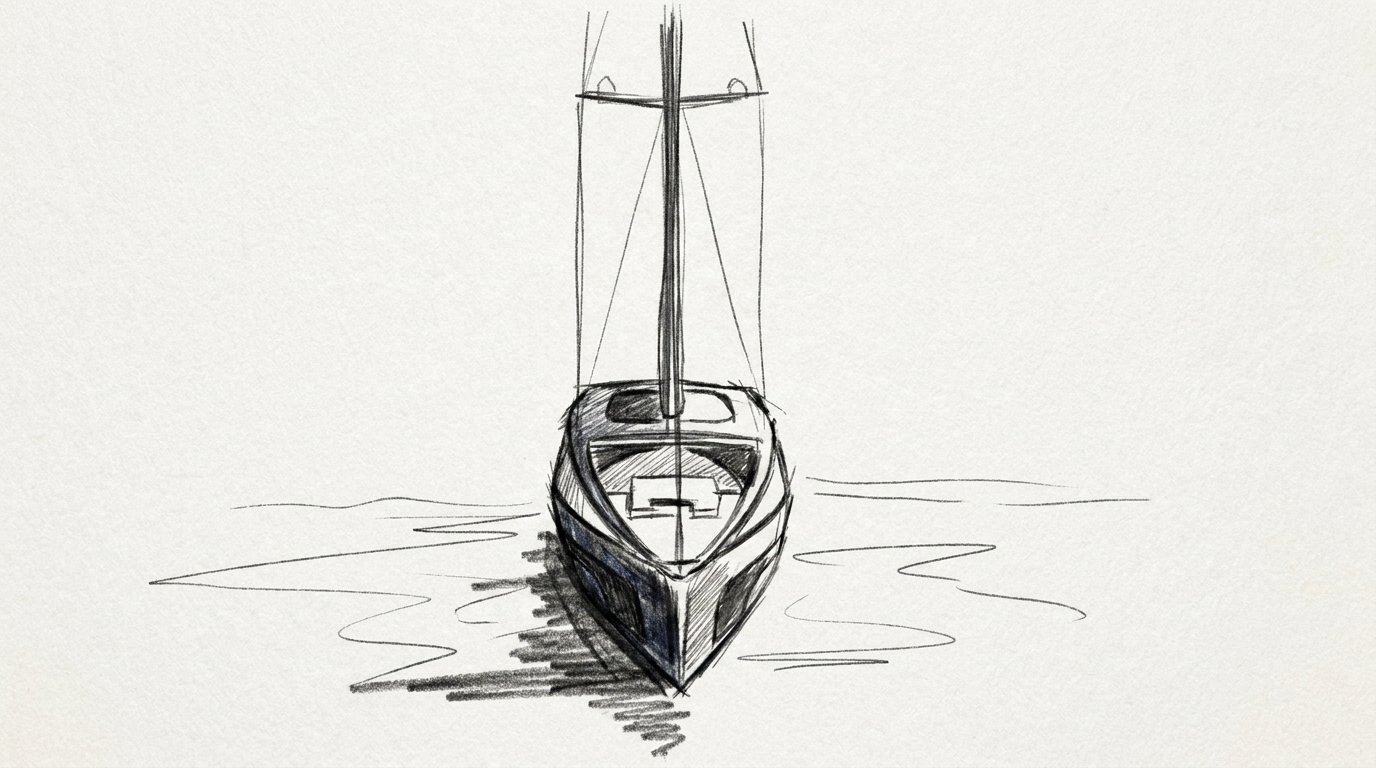
Paper, pencil, ink and Photoshop — the unfiltered visual record of how AUREON was found. Search lines, hesitations, alternate volumes: the kind of work that lives in a sketchbook before it ever reaches a render.

A Ideation

Raw pencil and marker doodles — silhouette exploration, volume studies, gestural notations. Where the design is still negotiable.

3/4 front loose pencil exploration
Plunging stern view showing aft staircase exploration
Quick black marker doodle with water strokes
3/4 stern pencil exploration
Front view pencil sketch on hatched sea
B Key sketches

Refined ink and graphite sketches. Defined views, controlled proportion, visible construction lines — the design locked in.

Profile pencil with detailed hatching, final design
3/4 front view, pencil with subtle teak deck
3/4 stern view showing aft staircase teak signature
3/4 frontal editorial view with hatched sea
Front view, pure pencil with mast detail
C Early Photoshop studies

Digital paintings on isolated white — these explored alternative volumes and surface treatments before the design settled into its final monolithic silhouette.

3/4 aerial view, Photoshop digital painting
3/4 stern showing aft staircase, digital painting
Pure profile silhouette, digital painting

Tap any sketch to enlarge. These visuals show the early creative process — the final AUREON design that emerged from these iterations is shown in Section 07.

07

Exterior / Renders

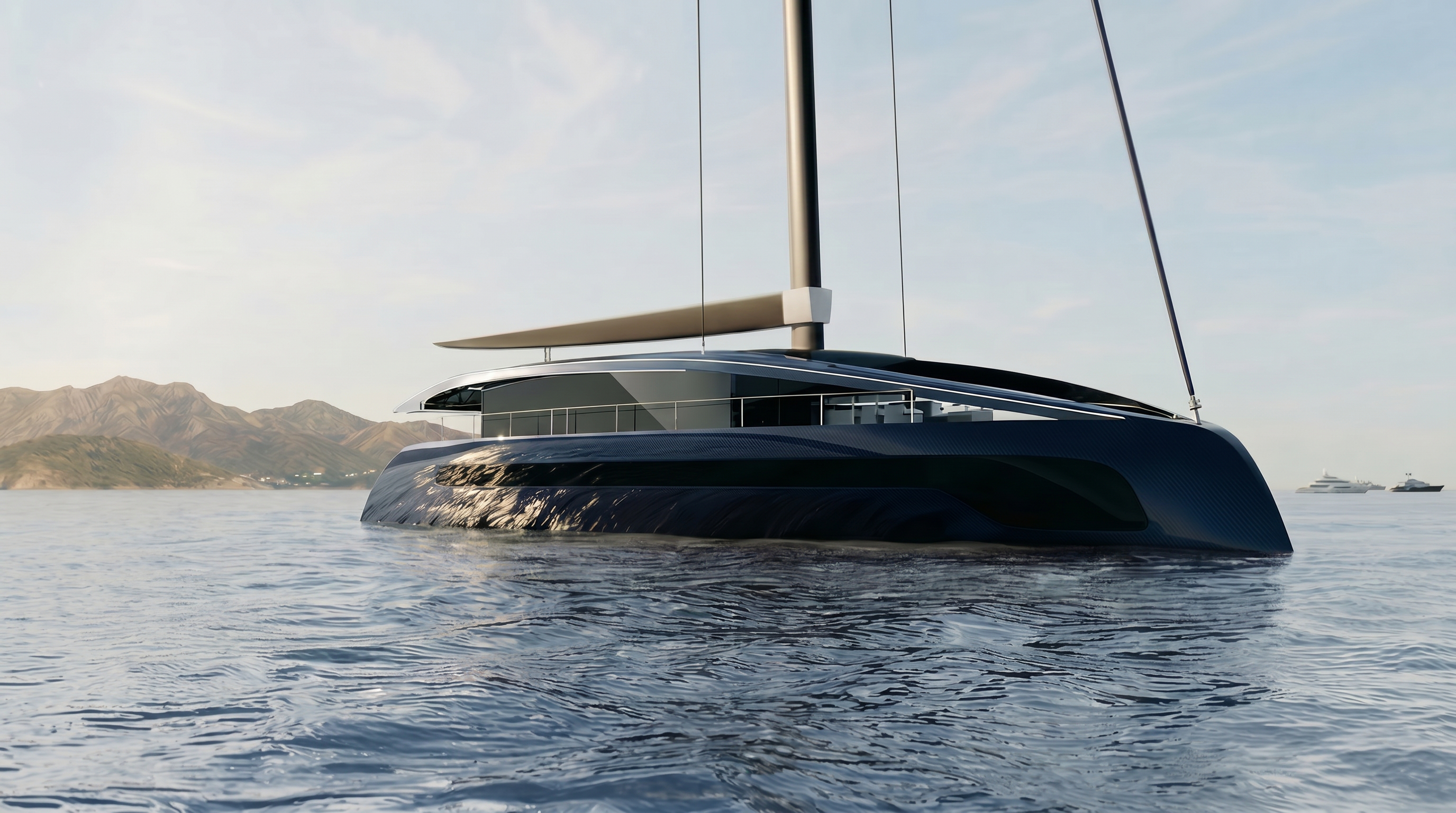
AUREON — 3/4 overview, Majorque
01 · Overview

The flush deck reads as a single unbroken plane from bow to stern. No superstructure interrupts the roofline — the architectural volume is continuous, low, and deliberately horizontal. At 50 metres, the silhouette holds its proportion without resorting to mass.

AUREON — profil bâbord, silhouette pure
02 · Silhouette

The port profile exposes the hull's defining geometry: a near-plumb bow, a continuous glass band replacing the conventional porthole rhythm, and a waterline that stays razor-thin from stem to stern. The carbon/Nomex skin reads in direct light — texture without ornament.

AUREON — vue arrière, escalier teck signature
03 · Aft staircase

The monumental rear staircase is the yacht's most deliberate formal choice — a scenographic entry from the sea, chosen over the conventional hydraulic platform. Seven steps of teak, full-beam width. It frames the transom as a facade, not a technical afterthought.

AUREON — étrave plumb, 3/4 avant
04 · Plumb bow

A plumb bow maximises waterline length — pure hydrodynamic logic translated directly into form. No reverse flare, no decorative rake. The bow enters the water at 90°, the hull widens aft in a single controlled curve. Every centimetre of length is working length.

10

Specifications / Technical drawing

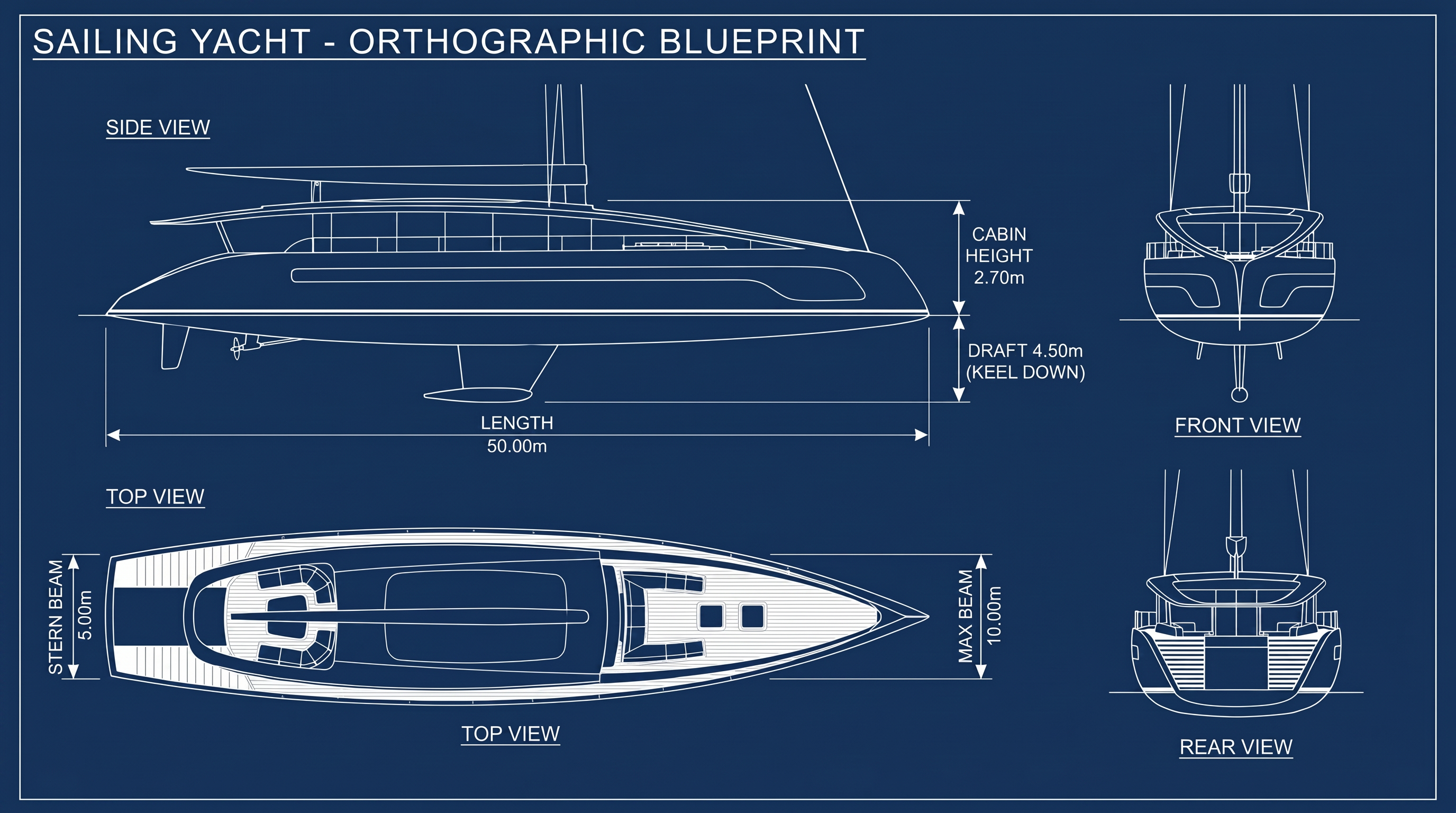
Four orthographic views with annotated dimensions. The 50-meter monohull packs a 72 m carbon mast, 1 750 m² of sail area and a retractable 6 m keel into a 240-ton carbon/Nomex hull.

AUREON — orthographic blueprint, 4 views with annotated dimensions
Length overall 50 m / 164 ft
Max beam 10 m
Stern beam 5 m
Draft — keel down 4.50 m
Cabin height 2.70 m
Displacement 240 t
Mast height 72 m carbon
Upwind sail area 1 750 m²
Retractable keel 6 m
Top speed 24 kn
Guests 10 + 7 crew
Hull material Carbon / Nomex
11

Outcome / Takeaways

AUREON is a personal concept, not an academic submission. It was developed in 2025 outside any educational framework, specifically to take a design position on a segment I find formally stagnant. No client brief, no academic constraint — only the question: what would a 50-meter sail yacht look like if architecture led the design?

The project is honest about what it is: a manifesto-scale exterior design exploration. The hull was developed through a full creative pipeline (paper sketches → Photoshop overpaints → Blender modeling and rendering), with technical choices grounded in eight years of personal sailing on cruiser-racers up to 16 meters. AUREON has not been validated by a naval architect, nor optimized through CFD — those are the next steps if this concept ever leaves my portfolio.

If I were to take it further, the natural next step would be collaboration with a naval architect (Reichel-Pugh, Vitruvius, or a studio I haven't yet identified) to validate the carbon hull layup, the rigging engineering, and the heel-recovery behavior of the retractable keel. The visual identity is locked. The naval engineering is the path forward.

Scope

Personal concept · 2025

Context

Self-initiated · no client brief

Field validation

Personal sailing background · 8 years

Next step

Naval architect collaboration

Next Project →

BOREAL H